
Hyderabadi biryani and the art of dum
Layered rice and meat sealed and slow-steamed — a Deccan kitchen signature.
By Vinay Saurabh · 9 Nov 2026
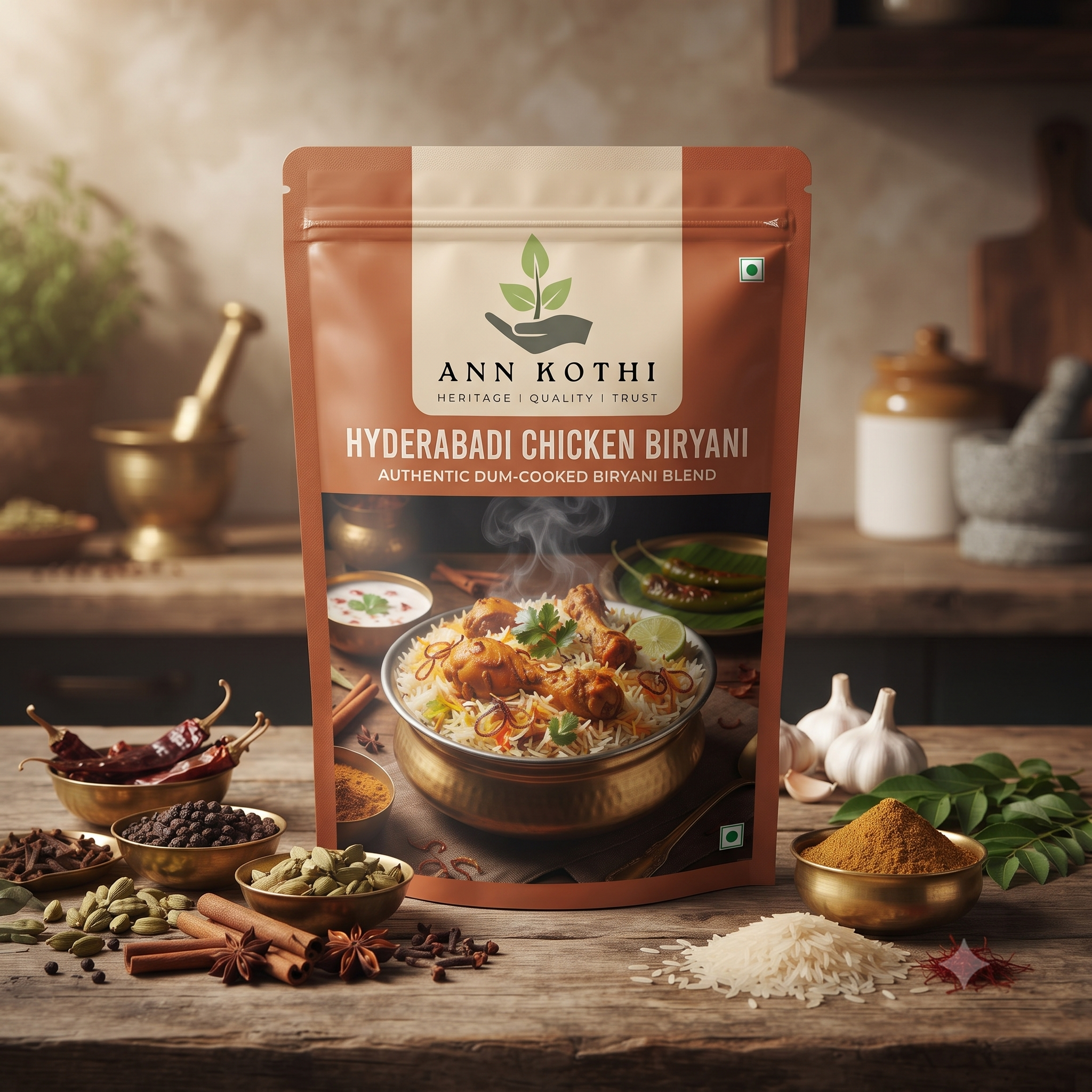
Biryani exists across India, but the Hyderabadi version has a distinct identity built around technique. The dum method — sealing the vessel, often with dough, and cooking over low heat — lets steam do the work, marrying rice, meat and aromatics without stirring.
The kachchi style, in which marinated raw meat is layered with partly cooked rice and brought together entirely in the pot, is especially associated with Hyderabad and demands careful timing so both cook perfectly.
We present this as a culinary tradition of the Deccan rather than a single dated invention. The cultural setting — the courtly and home kitchens of Hyderabad — shaped a dish that prizes fragrance, layered seasoning and restraint.
Our Hyderabadi Biryani Masala is meant to season the marinade and layers, not to overwhelm the rice. Good basmati, patient dum and real saffron do the rest.
On the origins
Hyderabadi biryani is associated with the kitchens of Hyderabad in the Deccan. It is known for the dum method — sealing the pot and slow-steaming — and for the kachchi technique of cooking marinated raw meat together with partly cooked rice.